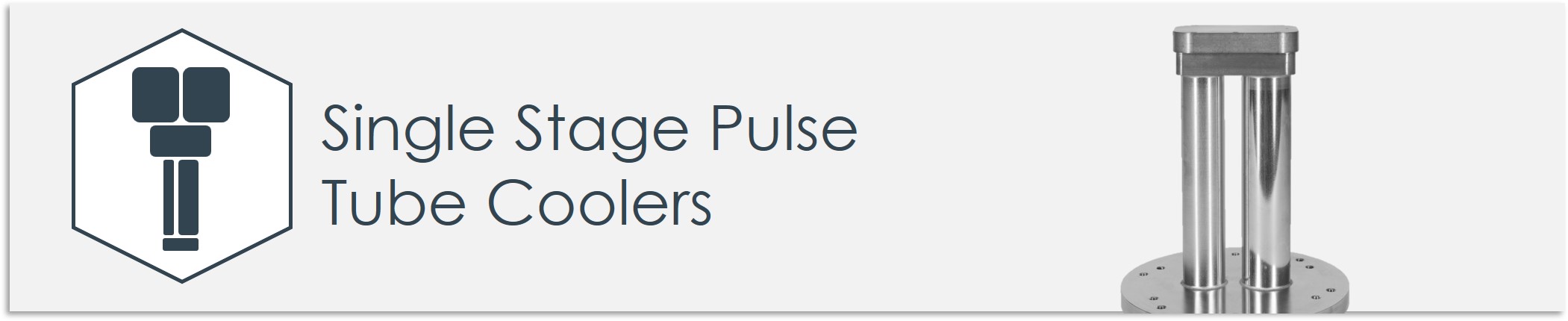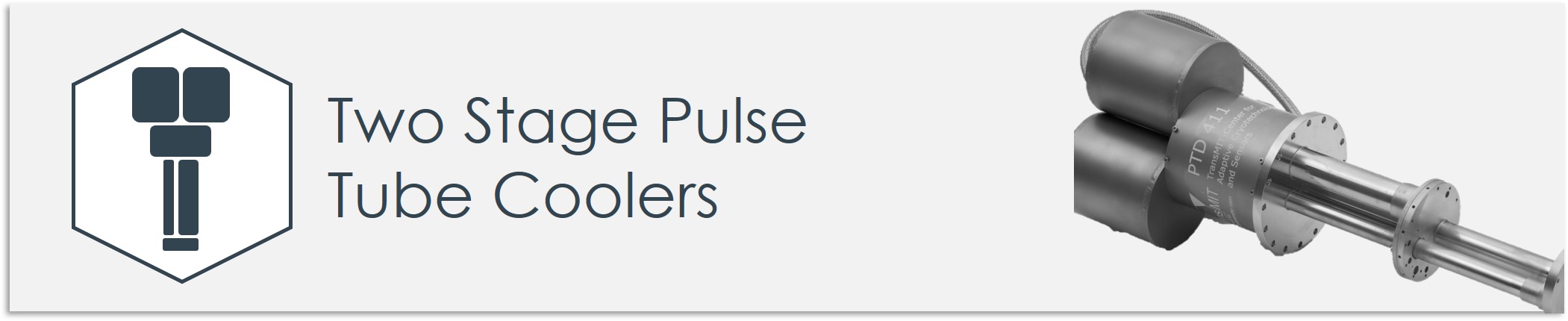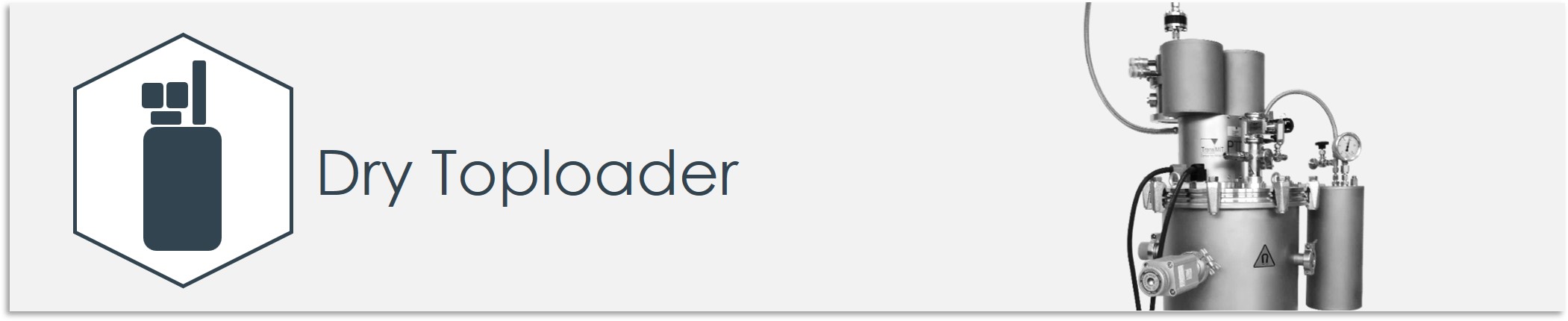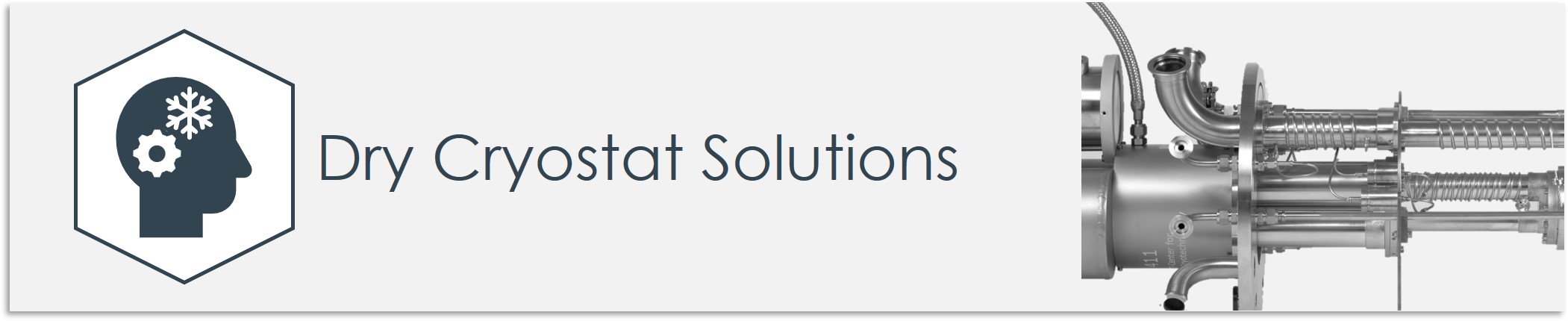

The cooling effect of the pulse tube cooler is based on a periodic pressure variation and displacement ("pulsation") of the working gas (Helium-4) in the so-called pulse tube, which is a thin-walled cylinder with heat exchangers at both ends (s. Figure). The pulse tube is connected to the pressure oscillator via a regenerator. The regenerator, which is filled with a porous material of high heat capacity, serves as a temporary heat storage that cools the gas flowing in from the pressure oscillator before entering the pulse tube and warms up the outgoing gas to ambient temperature. The cooling process starts with a compression phase where the gas, pre-cooled in the regenerator, flows into the pulse tube. In the subsequent expansion step the gas cools down and absorbs heat from the load that is attached to the cold platform via the cold heat exchanger. In order to achieve a proper cooling power the phase angle between pressure oscillation and gas displacement is adjusted by means of flow resistances and a buffer volume that are connected to the warm end. The unique feature of the PTC is the absence of cold moving parts, which considerably reduces the cooler generated noise and vibration and increases the reliability of the cold head. |
|
In case of Gifford-McMahon type PTCs (operating frequencies 1-10 Hz), the pressure oscillatior p(t) consists of a valved compressor in combination with a rotary valve that periodically connects the high-pressure side and the low-pressure side of the compressor with the cooler. Compressor and valve can be mechanically separated from the cold head by a flexible tube. In contrast, Stirling-type PTCs (operating frequencies 30-60 Hz) employ a valveless compressor. |
|